





A waterproofing plan is only as good as the material identification behind it. UGG footwear may combine suede, sheepskin, smooth leather, textile panels, coated finishes, platform soles, decorative trim and adhesives in one pair. A product suitable for plain suede may spot a specialty finish or leave residue on another panel. For La Crescenta and nearby foothill communities, the practical goal is to match the boot to the expected weather and improve compatible surface repellency without claiming more protection than the construction provides.
Begin with the exact model and official product description. If the page says waterproof, look for the construction details and intended conditions. If it says post-applied treatment or water-repellent, understand that performance is more limited. If no water claim appears, do not invent one with a general-purpose spray.
Protection Begins With the Upper Material
| Material or feature | Primary concern | Protection decision |
|---|---|---|
| Suede or twinface sheepskin | Uneven darkening, flattened nap and water rings | Use only approved suede or sheepskin care and avoid saturation |
| Smooth leather | Finish damage, residue or color shift | Follow the exact leather finish directions rather than suede instructions |
| Textile or knit panel | Absorption, dye movement and slow drying | Confirm that the product is approved for the specific textile |
| Metallic, coated or decorative finish | Permanent dulling, spotting or peeling | Do not spray until compatibility is confirmed |
| Waterproof membrane or seam sealing | Damage from incorrect care and false confidence | Maintain as directed and respect the model’s stated use limits |
UGG’s official care and cleaning guide says that not all Classic boots are water-resistant or waterproof and advises owners to check the individual model. It also distinguishes a post-applied treatment from a truly waterproof design. A protector can support eligible material, but it does not redesign the boot.
How to Read Water Claims Correctly
- A product described as waterproof is built with features intended to resist water entry, such as a membrane, seam sealing, a gusseted tongue or waterproof materials. The exact construction and limits belong to the individual model.
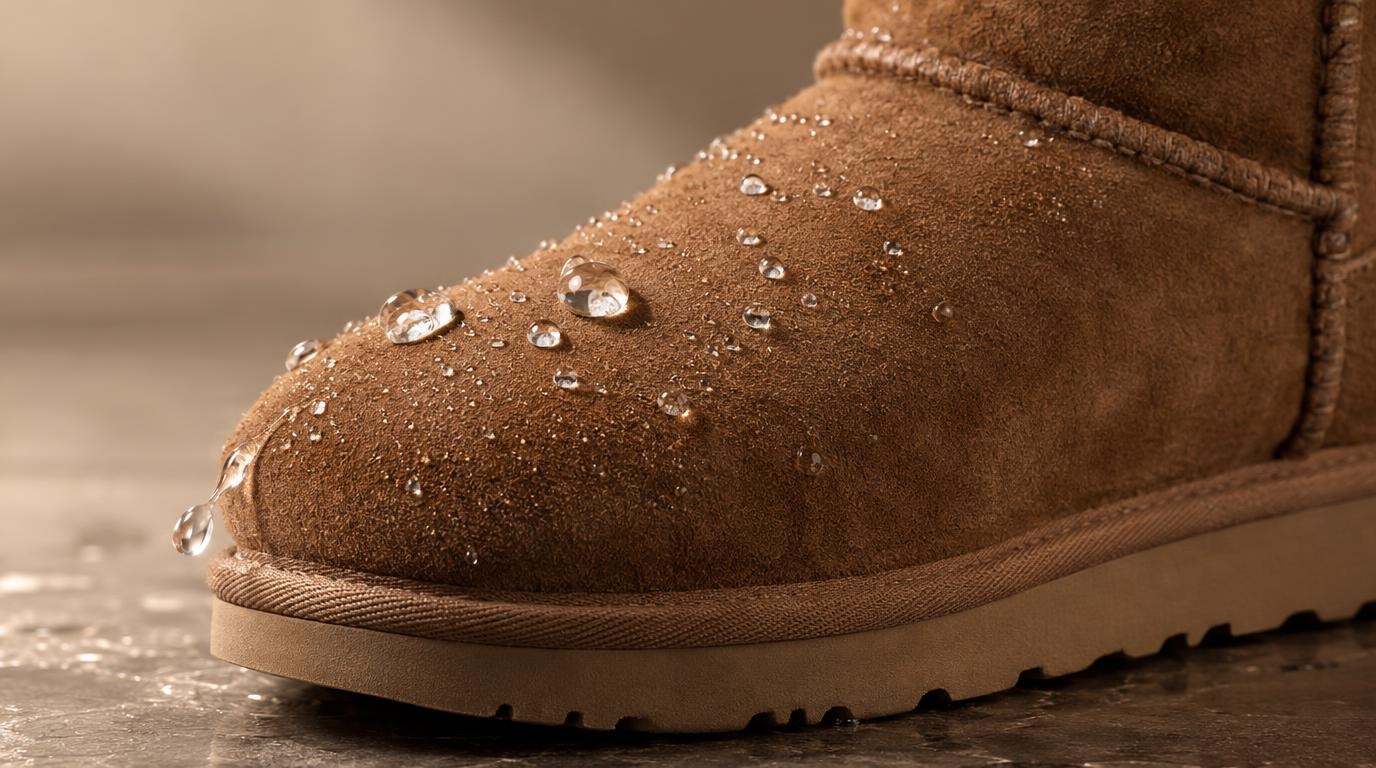
- A water-repellent treatment helps water bead or slows absorption at the surface. It does not seal every seam, opening or construction point, and it wears down with use.
- A post-applied factory treatment may give a new pair initial resistance to light water. That wording is not the same as a waterproof rating, and the current product page should be checked before wear.
A waterproof model can still have limits. The official Ashton Addie boot page describes waterproof leather and seam-sealed construction while positioning the boot for light to moderate rain and light snow. That language shows why owners should read beyond a single word and match footwear to the actual route.
UGG’s waterproof boot collection also highlights construction features such as seam sealing, gusseted tongues and water-repellent treatments. Those built-in elements cannot be created by spraying an ordinary Classic boot at home.
The Foothill Weather Decision
A forecast does not describe every surface you will cross. Irrigation, damp landscaping, curb runoff and debris can affect boots even when the sky is clear. Before choosing the pair, check the forecast, the route, how long you will be outside and whether a dry backup is available. A non-waterproof suede boot is a poor choice for sustained rain, pooled water or a trail with wet soil.
- Choose a waterproof model when meaningful rain or wet ground is expected.
- Use a compatible repellent only for the lighter exposure the model and product allow.
- Keep trouser and skirt hems from rubbing continuously against damp or freshly treated suede.
- Carry alternate footwear when the return conditions may differ from the morning forecast.
- Let boots air and dry fully between wears before storing them in an enclosed space.
Prepare Specialty and Mixed Material Boots
Inspect both boots under neutral light. Look for existing water lines, oil, dye transfer, stiffness, crushed nap, peeling coatings and weak trim. Remove only loose dry soil with a method approved for the exact material. A protector is not a cleaner; applying it over a stain may make later correction more difficult.
- Cover or avoid any component the protector label excludes.
- Do not assume that a product safe for one panel is safe for the whole boot.
- Test only when and where the current directions permit, then allow the test area to dry fully.
- Treat the pair evenly in one well-ventilated session instead of spot-spraying the most visible marks.
- Stop if a finish darkens sharply, becomes tacky or develops residue.
Use Protector Only as Directed
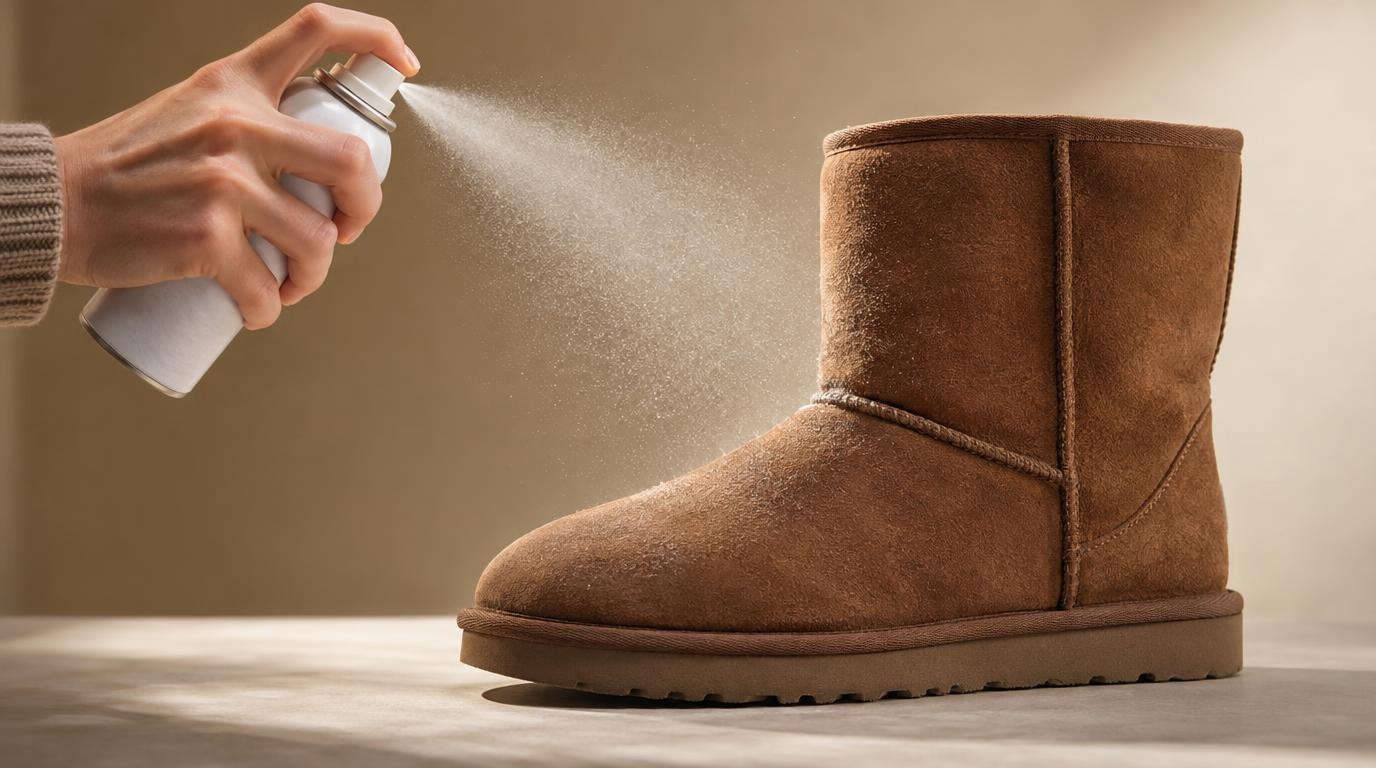
For eligible suede and sheepskin, UGG’s current protector directions call for a clean, dry surface, a well-ventilated area, a shaken bottle and an even spray from about six inches away. The material should be wet but not soaked. It should dry naturally for 24 hours in a cool, ventilated place away from direct heat and sunlight. Approved suede can then be brushed gently in one direction.
More product is not automatically more protection. Heavy application can saturate the upper, extend drying time and make color changes less even. Do not rush the process with a hair dryer, heater, radiator or direct sun. Do not wear a pair that still feels damp or smells strongly of product.
Responding to Water Exposure
When boots get wet, leave the wet area, blot rather than rub and allow natural drying. Support the shape gently with clean, colorfast absorbent material. Do not scrub the wet boundary or add cleaner while the suede is changing color. Once the pair is fully dry, evaluate both boots together for rings, stiffness, odor and loss of shape.
The official UGG wear and care article warns that water can ruin sheepskin or leather and specifically advises against machine washing. Conventional dry-cleaning is also not an appropriate universal solution for this footwear. A specialist assessment should be based on construction and condition.
When a Specialist Assessment Is Worthwhile
Request assessment for specialty colors, mixed finishes, oil stains, old water rings, previous home treatments, stiff suede or boots needed for an event. Bring the full pair, the care product used and any model information. Ask what can realistically improve, what may remain and how long natural drying and final inspection require. Protective treatment may be an option after compatible cleaning, but it should never be described as guaranteed waterproofing.
La Crescenta Cleaner outlines inspection and material-specific footwear care on its shoe and bag cleaning and repair page. The pair’s finish, wear, stains and earlier treatments determine what is appropriate. Existing dye loss, abrasion or structural damage may remain visible after care.
Questions About Protecting UGG Boots
Is every UGG boot safe to spray?
No. Materials and finishes vary, and one pair may contain several components. Confirm the exact model and protector compatibility, follow current instructions and avoid any excluded finish. When identification is uncertain, request an assessment before application.
Does a factory treatment last forever?
No. Surface treatments wear with friction, soil, weather and cleaning. Follow the model’s current maintenance guidance and the protector label. Do not reapply merely because a calendar date has passed; inspect condition and compatibility first.
What should I do with a water ring on suede UGG boots?
Do not scrub the ring or flood the surrounding suede. Let the pair dry naturally, document any product already used and arrange an assessment. Water rings can involve soil, mineral deposits, dye movement or nap change, so one household method does not fit every case.
Use the La Crescenta Cleaner contact page to confirm current shop information before bringing in specialty or previously treated boots.
Call La Crescenta Cleaner at (818) 475-7575 to discuss the model, material, stain history and timing before an in-person assessment.